


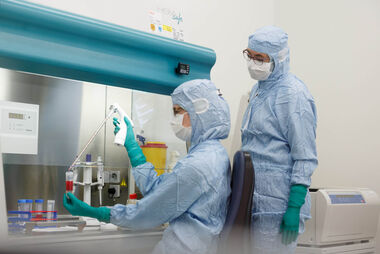
First German hospital with special manufacturing license for CAR-T cells
Heidelberg University Hospital is the first German clinic to receive special manufacturing approval for CAR-T cells in leukemia therapy. CAR-T cells are the body's own defense cells (T lymphocytes) that are genetically modified in the laboratory so that they can recognize and kill cancer cells much more effectively. The novel drug Heidagen-lecleucel (Heidi-cel) consists of CAR-T cells that are used in chronic lymphocytic leukemia (CLL) when other therapies have been exhausted. It was developed at Heidelberg University Hospital by the GMP (Good Manufacturing Practice) laboratory team in close collaboration with the Department of Hematology, Oncology, and Rheumatology.
A number of effective drugs are available for the treatment of CLL, the most common form of leukemia in older adults. "However, if a relapse occurs and the cancer does not respond sufficiently to conventional therapies, there has been no alternative until now. Our CAR T cells open up new treatment prospects for patients who previously had few therapeutic options," explains Professor Schmitt, who played a key role in the development. The first patients will be treated this year. CAR-T cells from the pharmaceutical industry are already available for other forms of leukemia and certain lymphomas.
A new video series provides insight into the range of oncological treatments offered at Heidelberg University Hospital
Today's focus: Hematology and Oncology
What makes Heidelberg University Hospital so special? What role does current research play in the treatment of hematological diseases? What special therapies does Heidelberg University Hospital offer? This video provides answers to these and other questions.